School Support





Collaborative School Support
Collaborative School Support
I bring ABA support into the settings where children spend their everyday learning and social time.
A More Personal Way to Build Everyday Independence
I collaborate with teachers, daycare providers, and families to identify meaningful goals within the child's regular routines. Support may focus on communication, transitions, classroom participation, peer interactions, self-help skills, or responding to directions. Strategies are selected to match the child's developmental needs and the expectations of the setting.
The experience is practical and team-centered, with attention to what helps the child participate more comfortably and successfully. I observe patterns, share clear recommendations, and help caregivers use consistent approaches across the day. This creates continuity between therapy, school, daycare, and home without separating skills from real life.
Ideal For
Children adjusting to classroom or daycare routines
Learners developing communication or social skills
Children who need support with transitions or directions
School teams seeking consistent behavioral strategies
How It Works
Discuss Priorities: We identify the child's needs, strengths, and everyday challenges.
Coordinate Support: I collaborate with caregivers and school staff on practical strategies.
Apply and Refine: Support is used in natural routines and adjusted as the child's needs develop.

Care that builds confidence
I provide compassionate ABA therapy for children and adults on the autism spectrum, helping families build communication, independence, social skills, and confidence across home, school, and community settings. My approach is individualized, consistent, and rooted in the belief that behavior is communication. By partnering with families and meeting each person where they are, I create supportive pathways toward meaningful progress and greater everyday independence.
Support for every step
Find care that fits
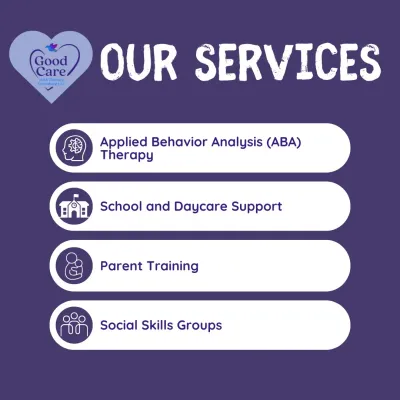
ABA Therapy
ABA therapy helps children and adults build communication, daily living, learning, and social skills. We start with your child's strengths, challenges, and family routines, and build goals for home, daycare, school, and community. Sessions are one-to-one, through play and positive reinforcement, in person and via telehealth, depending on the case. Services typically start about one month after we receive your documents
Parent Training
I equip parents with practical strategies and guidance to support skill development, routines, communication, and positive behavior at home, in person or via telehealth

Social Skills Groups
Parent Training starts early, before regular therapy is fully underway. We help you understand the patterns behind your child's behavior, what happens before it, what follows it, and what helps. We talk through how therapy will look over time, what to expect, and what each side commits to. Training starts while authorization is in progress, so skills learned in sessions become part of everyday life at home.
About Caleb K Ofori
About Caleb — Caleb Ofori, M.Ed, BCBA. I began my work in psychology, education, and behavior analysis for the last 15 years, and I focus on teaching new skills, supporting families, and helping parents and children reach long-term goals. Every child is different, and every family has different needs — those needs are my main priority.

How to start :
Services typically start one month after we receive your documents. Step 1: Contact us, call (470) 253-4042 or email support@goodcareabatherapy.com. Step 2: Send your documents. Step 3: Insurance check and intake call. Step 4: Assessment, up to two weeks. Step 5: Authorization, and Parent Training starts. Step 6: Services start. Documents: diagnosis from a doctor who specializes in diagnosing children, medication and health records, IEP and school records, insurance card and photo ID.
Care approach
We complete the initial assessment as fast as we can, up to about two weeks, to get a true picture of your child to build from. Parent Training begins early. We identify patterns together, explain how therapy will look over time, and set clear expectations, including the ethical obligations of your family and our company. Goals are practiced at home, daycare, school, and in the community, in person and via telehealth, depending on the case.
Frequently Asked Questions About ABA Therapy
Frequently Asked Questions About ABA Therapy
Explore common questions about applied behavior analysis and how it can support children and adults on the autism spectrum. These answers offer a helpful starting point for understanding compassionate, individualized behavioral support.
Let's Talk About Your Needs
Send me a message to learn how I can support your family.